Sunday, December 13, 2020

Signing Curveball at the Crossroads at Ferg's Sports Bar


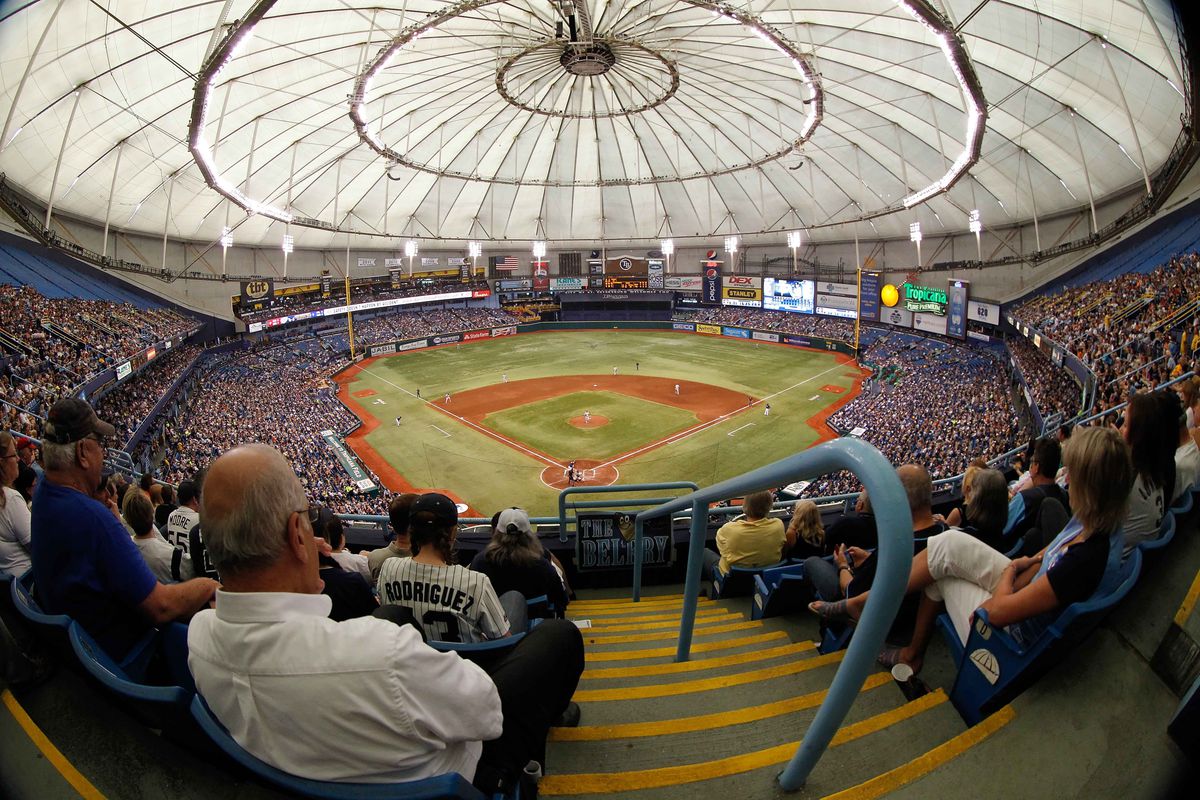
I had my first book signing event at Ferg's Sports Bar in St Pete, in shadow of Tropicana Field. I could not think of a better place to kick off my debut novel.

It was definitely fun, even if I gave out more business cards about the book than book sold. But I talked to some great people, including Mike Rickord of the St Pete Sports Connection.

I hope to be at Fergs again, perhaps closer to or during baseball season. Hope to see everyone there.

Friday, December 11, 2020

Curveball at the Crossroads Book Signing at Fergs Dec 12th 1pm to 4pm


I am super excited to announce that my first book signing will be at Ferg's Sports Bar & Grill on Dec 12th from 1pm to 4pm.

I will be talking with Mike Rickord of St Pete Sports from 12:30 to 1pm then I will selling and signing books. I hope to meet many of my readers there. It will be a great time.

I appreciate your support!


Thursday, December 10, 2020

Talking with Shooter and the Stache

I had the pleasure of talking with the fine gentlemen of the Shooter & the Stache on their video sportscast. We talked Rays, the Rays stadium situation, and of course, my new book Curveball at the Crossroads.

Check out their show here. I am on at the 35 minute mark. By the way, I love their intro.


Wednesday, December 2, 2020

Book Trailer for Curveball at the Crossroads

Just like movie trailers, book trailers are designed to attract interest. This is my first book trailer and I think it turned out really good. Many thanks to Tampa Bay area radio personalities Steve Carney and Patro Mabili for their voices and Bill McArdle of Xtra Medium Productions for his work putting the video together.

You can buy Curveball at the Crossroads by clicking this link. Find out more about the book at CurveballattheCrossroads.com

As always, thank you for your support!


Saturday, November 21, 2020

Curveball at the Crossroads: a new baseball novel with a Tampa Bay influence


Order here:

Curveball at the Crossroads

I am super excited to announce that my first novel is now available for purchase. Entitled Curveball at the Crossroads, it is the story of a baseball player who makes a deal with the Devil after a career-ending injury. As he rises in success, he realizes eventually all deals come with a price. His deal with the Devil could cost him everything he cares about.

As far as I know, baseball novels by Tampa Bay writers are rare. Most baseball books focus on New York or other major markets. While the book focuses on the crossroads of rural Mississippi, the main character spends most of his professional career in Tampa Bay. There are also other mentions of Tampa area locations.

This book is a labor of love. I started it in 2012 and was tinkering with it for nearly eight years before pitching it to a publisher. When I finished, I was very happy with the final product. I hope others find it as enjoyable as I do.

I hope to have book signings throughout Tampa Bay during the holiday seasons and then again during Spring Training and the 2021 baseball season. I look forward to hearing what people think and meeting any and all of my readers.

Order Curveball at the Crossroads through Legacy Book Publishing here:

CURVEBALL AT THE CROSSROADS

Curveball at the Crossroads will be posted on Amazon in a few weeks. I will post that link as soon as I get it, but supporting local publishers is important.

As always, thank you for reading and for your support!


Saturday, July 18, 2020

Book Review - Hall of Name: Baseball's Most Magnificent Monikers From The Only Nolan to Van Lingle Mungo and More


A few months ago, prominent baseball writer D.B. Firstman released their new book, "Hall of Name: Baseball's Most Magnificent Monikers From "The Only Nolan" To "Van Lingo Mungo" And More". As a baseball history fan, I was intrigued. As a Tampa Bay baseball blogger, I asked D.B. if the book had any relevance to Tampa Bay baseball.

"Quinton McCracken and Grant Balfour," D.B. replied.

I was sold.

Hall of Name is a fantastic look at the amazing names that have graced baseball boxscores from the early days of professional baseball (who is Lip Pike?) to the current National and American Leagues. D.B. divides the names into several different categories - players with rhyming names and alliteration (Ed Head, Ugueth Urbina, etc.), dirty names (Gene Krapp, Tony Suck, etc.), rhythmic names (Billy Jo Robidoux, Kiki Culyer, etc.), and a grab-all category of other fantastic names (Jimmy Gobble, Urban Shocker, etc.).

Each of the 100 players profiled in the book has a short write-up. The write-up is divided into three parts. The intro contains the player's full name, pronunciation of difficult name (how do you pronounce Mmahat?), nickname, height/weight, born/died, position, years in the Majors, and fascinating name etymology/definitions. Following the intro is a brief biography of each player, which in some cases must have required a great amount of research. Closing each player's write-up are paragraphs on each player's best day in the bigs, "wonder of the name", "not to be confused with", fun anagrams, and "ephemera" - random notes about the player, from family tree to what they did after leaving the game.

While Quinton McCracken and Grant Balfour interested me from the onset, Hall of Name features 13 players affiliated with Tampa Bay, from those who originated in the area to those who played Major or Minor Baseball here to those who died here. As a matter of fact, the book's first three entries had significant Tampa Bay ties.

The Tampa Bay 13:

  • Boof Bonser - born in St. Petersburg in 1981
  • Callix Crabbe - played college baseball in Sarasota in 2002
  • Coco Crisp - fought Rays pitcher James Shields in 2008
  • Gregg Legg - Clearwater Phillies hitting coach 1994-1995
  • Gowell Claset - died in St. Petersburg in 1981
  • Lastings Milledge - born in Bradenton in 1985
  • Quinton McCracken - played for the Devil Rays in 1998-2000
  • Pete LaCock - played for the St. Pete Pelicans of the Senior Professional League in 1989
  • Razor Shines - managed the Clearwater Threshers in 2008
  • Grant Balfour - pitched the Rays 2008-2010, 2014-2015
  • Chone Figgins - played for Brandon High School in 1997
  • Mark Lemongello - arrested for kidnapping and armed robbery in St. Petersburg in 1982
  • Johnny Nee - died in St. Petersburg in 1957

I was surprised so many of the players in the book had Tampa Bay ties, especially considering only two played for the region's Major League team. I was expecting them, and Milledge I knew was from the area. But the rest were a surprise, especially Lemongello's criminal escapade.

Overall, I recommend Hall of Name for anyone interested in baseball trivia and history. D.B. did an amazing amount of research, and it is a very fun read. As each profile is short, Hall of Name is the perfect book to read in short pieces, such as on a lunch break. Each profile is interesting and I think I learned more about the history of names from this book than I knew before. As I read, I couldn't help but admire D.B.'s ability to write seriously and (mostly) without judgement about these players' names. No name is disrespected, even if for Tony Suck "when it came to baseball, the name was totally apt".

Hopefully there will be sequel, one that perhaps dips into the Minor Leagues, Negro Leagues, or All-American Girls Professional Baseball League. I would love to read more about D.L. Rambo of the 1920 St. Petersburg Saints or Robert Orange of the 1969 Tampa Tarpons.

Click here to order Hall of Name: Baseball's Most Magnificent Monikers from 'The Only Nolan' to 'Van Lingle Mungo' and More from Amazon.

Or click here to buy Hall of Name: Baseball's Most Magnificent Monikers from 'The Only Nolan' to 'Van Lingle Mungo' and More from bookshop.org and raise money for local bookstores.

And I miraculously wrote this whole review without mentioning Rusty Kuntz.

Almost. 

Monday, June 8, 2020

The Green Fields of the Mind - a baseball fan must-read

As a die-hard baseball fan, I have always tried to stay true to two traditions: the first, read a baseball book as the season opens and second, read the first paragraph of A. Bartlett Giamatti's "The Green Fields of the Mind" at the season's end. This season I looked up Giamatti's essay and read it in it's entirety. Although the players have long since past from the game, the feeling remains, and few writers, if any, have expressed the passion of a baseball fan with more clarity.

Here is "The Green Fields of the Mind" in its entirety 
(acquired from http://mason.gmu.edu/~rmatz/giamatti.html):
---------------------------------------------------

"The Green Fields of the Mind "

It breaks your heart. It is designed to break your heart. The game begins in the spring, when everything else begins again, and it blossoms in the summer, filling the afternoons and evenings, and then as soon as the chill rains come, it stops and leaves you to face the fall alone. You count on it, rely on it to buffer the passage of time, to keep the memory of sunshine and high skies alive, and then just when the days are all twilight, when you need it most, it stops. Today, October 2, a Sunday of rain and broken branches and leaf-clogged drains and slick streets, it stopped, and summer was gone.

Somehow, the summer seemed to slip by faster this time. Maybe it wasn't this summer, but all the summers that, in this my fortieth summer, slipped by so fast. There comes a time when every summer will have something of autumn about it. Whatever the reason, it seemed to me that I was investing more and more in baseball, making the game do more of the work that keeps time fat and slow and lazy. I was counting on the game's deep patterns, three strikes, three outs, three times three innings, and its deepest impulse, to go out and back, to leave and to return home, to set the order of the day and to organize the daylight. I wrote a few things this last summer, this summer that did not last, nothing grand but some things, and yet that work was just camouflage. The real activity was done with the radio--not the all-seeing, all-falsifying television--and was the playing of the game in the only place it will last, the enclosed green field of the mind. There, in that warm, bright place, what the old poet called Mutability does not so quickly come.

But out here, on Sunday, October 2, where it rains all day, Dame Mutability never loses. She was in the crowd at Fenway yesterday, a gray day full of bluster and contradiction, when the Red Sox came up in the last of the ninth trailing Baltimore 8-5, while the Yankees, rain-delayed against Detroit, only needing to win one or have Boston lose one to win it all, sat in New York washing down cold cuts with beer and watching the Boston game. Boston had won two, the Yankees had lost two, and suddenly it seemed as if the whole season might go to the last day, or beyond, except here was Boston losing 8-5, while New York sat in its family room and put its feet up. Lynn, both ankles hurting now as they had in July, hits a single down the right-field line. The crowd stirs. It is on its feet. Hobson, third baseman, former Bear Bryant quarterback, strong, quiet, over 100 RBIs, goes for three breaking balls and is out. The goddess smiles and encourages her agent, a canny journeyman named Nelson Briles.

Now comes a pinch hitter, Bernie Carbo, onetime Rookie of the Year, erratic, quick, a shade too handsome, so laid-back he is always, in his soul, stretched out in the tall grass, one arm under his head, watching the clouds and laughing; now he looks over some low stuff unworthy of him and then, uncoiling, sends one out, straight on a rising line, over the center-field wall, no cheap Fenway shot, but all of it, the physics as elegant as the arc the ball describes.

New England is on its feet, roaring. The summer will not pass. Roaring, they recall the evening, late and cold, in 1975, the sixth game of the World Series, perhaps the greatest baseball game played in the last fifty years, when Carbo, loose and easy, had uncoiled to tie the game that Fisk would win. It is 8-7, one out, and school will never start, rain will never come, sun will warm the back of your neck forever. Now Bailey, picked up from the National League recently, big arms, heavy gut, experienced, new to the league and the club; he fouls off two and then, checking, tentative, a big man off balance, he pops a soft liner to the first baseman. It is suddenly darker and later, and the announcer doing the game coast to coast, a New Yorker who works for a New York television station, sounds relieved. His little world, well-lit, hot-combed, split-second-timed, had no capacity to absorb this much gritty, grainy, contrary reality.

Cox swings a bat, stretches his long arms, bends his back, the rookie from Pawtucket who broke in two weeks earlier with a record six straight hits, the kid drafted ahead of Fred Lynn, rangy, smooth, cool. The count runs two and two, Briles is cagey, nothing too good, and Cox swings, the ball beginning toward the mound and then, in a jaunty, wayward dance, skipping past Briles, feinting to the right, skimming the last of the grass, finding the dirt, moving now like some small, purposeful marine creature negotiating the green deep, easily avoiding the jagged rock of second base, traveling steady and straight now out into the dark, silent recesses of center field.

The aisles are jammed, the place is on its feet, the wrappers, the programs, the Coke cups and peanut shells, the doctrines of an afternoon; the anxieties, the things that have to be done tomorrow, the regrets about yesterday, the accumulation of a summer: all forgotten, while hope, the anchor, bites and takes hold where a moment before it seemed we would be swept out with the tide. Rice is up. Rice whom Aaron had said was the only one he'd seen with the ability to break his records. Rice the best clutch hitter on the club, with the best slugging percentage in the league. Rice, so quick and strong he once checked his swing halfway through and snapped the bat in two. Rice the Hammer of God sent to scourge the Yankees, the sound was overwhelming, fathers pounded their sons on the back, cars pulled off the road, households froze, New England exulted in its blessedness, and roared its thanks for all good things, for Rice and for a summer stretching halfway through October. Briles threw, Rice swung, and it was over. One pitch, a fly to center, and it stopped. Summer died in New England and like rain sliding off a roof, the crowd slipped out of Fenway, quickly, with only a steady murmur of concern for the drive ahead remaining of the roar. Mutability had turned the seasons and translated hope to memory once again. And, once again, she had used baseball, our best invention to stay change, to bring change on.

That is why it breaks my heart, that game--not because in New York they could win because Boston lost; in that, there is a rough justice, and a reminder to the Yankees of how slight and fragile are the circumstances that exalt one group of human beings over another. It breaks my heart because it was meant to, because it was meant to foster in me again the illusion that there was something abiding, some pattern and some impulse that could come together to make a reality that would resist the corrosion; and because, after it had fostered again that most hungered-for illusion, the game was meant to stop, and betray precisely what it promised.

Of course, there are those who learn after the first few times. They grow out of sports. And there are others who were born with the wisdom to know that nothing lasts. These are the truly tough among us, the ones who can live without illusion, or without even the hope of illusion. I am not that grown-up or up-to-date. I am a simpler creature, tied to more primitive patterns and cycles. I need to think something lasts forever, and it might as well be that state of being that is a game; it might as well be that, in a green field, in the sun.

Tuesday, February 11, 2020

Delusionally Doubling Down on the Montreal Plan

Over the last few days, the Tampa Bay Rays front office have released several quotes advocating their "Sister City" plan to divide Major League Baseball between Tampa Bay and Montreal.

It is a stupid, stupid, stupid plan made by a greedy billionaire designed to rip the heart out of the fanbase and prepare them to lose the team forever.

As I have written several times, I disagree with this plan. I have also been on ABC Action News twice discussing my opposition.


From a business perspective, former Wall Street investor Stu Sternberg is attempting to diversify his assets. He figures if he and his Montreal business partners each have to invest less in smaller stadiums in two markets, there is less total financial commitment while receiving increased stadium attendance bumps in two cities. By going international, he also hedges against a US economic decline. There has been much talk that the US economy will eventually recede, and when it does Sternberg will have Canada to buoy his investment.

Stu Sternberg is not increasing his gains enough here in Tampa Bay. Despite franchise value gains of 27% in 2017, 9% in 2018, 12% in 2019 according to Forbes, that is not enough for his Wall Street wallet. He wants to better maximize his investments. This isn't about emotions or people. It is about dollars and gains.

He invests less, makes more, and is covered against a market tightening. What is there not to like from the perspective of a Wall Street investor?

If one billionaire can do it, can others? Where does this split-city plan stop? In his interview with WDAE at Rays Fan Fest, Sternberg mentioned that MLB did not consider Montreal a full-time MLB market. That is the first I have heard that said, and it should be a big deal.

Consider this: Montreal is a city of 4 million people. In 2015, Montreal had a GDP of $193 billion dollars (Tampa Bay had $118 billion). From 1979 to 1983, the Expos were in the top 5 in attendance in the National League. Montreal is a legit city with an international economy and baseball pedigree.

If they don't reach the level of full-time market, who else doesn't? Does Pittsburgh? Milwaukee? Cincinnati? Cleveland? What is the threshold? Because if owners follow the Rays lead and start splitting seasons throughout MLB, the only teams that will be in their cities full-time will be in the mega markets of New York, Chicago, and Los Angeles.

Would the Pirates consider moving half their season to Nashville? What about the Indians playing half their games in San Antonio? Could the A's play half their games in Portland? Maybe the Marlins split half their games between Miami and Las Vegas.

Where does this end? What is the threshold of a Major League market if neither Tampa Bay nor Montreal make the cut?

By the way, Tampa Bay is a robust enough market for four Minor League Baseball teams, four Spring Training teams, an NFL team, and NHL team, a major college program, and an XFL team. Montreal has excess economic capacity as it only hosts the Montreal Canadiens and the Montreal Alouettes of the Canadian Football League (CFL). But apparently, that is not a enough for a full-time market to Major League Baseball.

Another fallacy in the Sister City argument is that demand is driven by availability. Stu Sternberg and the Rays front office believe they can get the same attendance of 1 million plus fans to Tropicana Field in April, May, and June that they get from April to September because the supply of games is smaller.

There are many reasons why this reduced-supply increased-demand concept isn't realistic.

For one, the Rays will still face an abundance of regional sports competition. If they play in Tampa Bay in the spring, they face competition from four Minor League Baseball teams, the Tampa Bay Lightning, and the new XFL Vipers. As well, many local fans have just spent their money on Spring Training.

Second, traditionally the Rays struggle to draw in the early months of the season, especially in May. May is typically their worst month of the season. People are not yet fully engaged in baseball in May. How do you expect the same type of fanbase excitement in the first half of the season versus the second half? In the first half, teams are still figuring out who they are. There is a saying that baseball teams don't really know what they have until the 1/3 point (54 games) in the season. Will they be contenders? Will they be also-rans? If the Rays play the first three months of the season in Tampa Bay, Tampa Bay will never again experience a pennant race in person.

Third, Stu Sternberg believes the Rays will draw a million people in three months with half a schedule - and maybe less than half the games against the Yankees, Red Sox, and other teams that draw opposing fans. Typically, the Rays play 9 home games each versus the Red Sox and Yankees. What if all 9 games are after June? What if only 3 games versus each are while the Rays are in the bay area? Then the fans in Montreal get to see the Rays top rivals and the fans of Tampa Bay area left with the less appealing part of the schedule.

The Rays cannot expect Major League Baseball to cater the schedule to them and provide them a 50/50 split in opponents for each fan base. And what about interleague rotational games? Fans in Tampa Bay may never get to see players from an interleague team such as the Marlins, Mets, or Cubs play the Rays if those games are always scheduled in the second half of the season.

Fourth and lastly, it is easy to imagine that this arrangement pitting fans and officials of both cities against each other as they will compare and contrast attendance as a measure of what fanbase supports the team more. If Tampa Bay draws less against the Yankees in April (as the Lightning are simultaneously in the playoffs) than Montreal does in September, Tampa Bay fans will probably get mocked. There will be non-stop comparisons as to which city is a better host in the media. Sternberg won't feel this competition as he makes money either way, but the fans and the cities will.

The sister city plan assumes these are loving, cooperating siblings, not competitive, bitter, catty siblings. And if the Montreal team is already saying Montreal is a better city than St. Petersburg, what will they say if the Montreal side of attendance exceeds the Tampa Bay side?

Then again, Sternberg might be the kind of parent who enjoys seeing siblings compete. But the side that has their team ripped from them will not take well to another city saying they are better hosts. There is already a malaise around the Rays. Hearing Montreal boast about being better hosts will only further turn Tampa Bay fans off to the franchise and the arrangement.

Lastly, a huge obstacle to the Rays success in Tampa Bay has always been the presence of the New York Yankees. What if the Rays said they were willing to stay full-time if the city cut their lease with the Yankees? Then Steinbrenner Field could be turned into a larger stadium in a centralized location. The Yankees have enough money to build a new spring training stadium anywhere in the world. The Rays know this, the Yankees know this, the City of Tampa knows this.

But challenging Steinbrenner presence in Tampa is either taboo, forbidden, or never mentioned in public, even though the Yankees have only been playing in Tampa two years more than the Rays have been playing in St Petersburg (1996 to 1998). The City of Tampa loves the Yankees.

By the way, if you haven't read the parody site Tampa News Force article entitled "Tampa Bay Vipers thankful to finally have sports spotlight to themselves", I highly recommended it. It is as much a commentary on the Vipers competition as it is the Rays local competition.
“Spring training starts in a couple of weeks, too”, he continued, as sweat formed on his brow. “I forgot about that. Sure, the Rays train way down in Port Charlotte but three teams, including the New York Yankees, possibly the most prolific and beloved franchises in sports history are right here for over a month, smack in the middle of our season.” He stopped, drew a deep breath and sighed, “The New York Yankees. Not the San Diego Padres or some other godforsaken franchise no one cares about, just the Notre Dame of Major League Baseball, that’s all.”

Wednesday, October 2, 2019

Talking Rays Marketing on ABC Action News

On the field, there is no doubt the Rays have had an amazing season, winning 96 games and making the postseason for the first time in six years. Off the field, the season was less than spectacular, with the Montreal situation and the continued stadium saga looming over the franchise.

As the team enters the postseason, I have noticed a lack of marketing by the team throughout the region, especially when compared to the marketing of the Tampa Bay Lightning and Tampa Bay Bucs. My tweets on the issue caught the eye of Erik Waxler of ABC Action News. Waxler paid me a visit on Wednesday and asked me a few questions about the Rays and the attitude of Rays fans.

Always great to be able to talk to a bigger audience. Many thanks to Erik Waxler and ABC Action News.


Friday, June 28, 2019

It is designed to break your heart: Thoughts on the Rays two-city solution


I have been writing about Tampa Bay baseball for over 10 years. For the first five years, I wrote about being a fan. I wrote about the World Series. I wrote about Game 162. I wrote about no-hitters, cowbells, and Rays-hawks. Then in 2014, I started this blog and dedicated myself to determining whether or not Tampa Bay was a Major League market.

As a Tampa resident, I came into the project with biases. I wanted to believe the market was not the problem.

For four years, I wrote every night. I tracked the attendance of the Rays, four Spring Training locations, and the four Minor League teams that call Tampa Bay home. I wrote about promotions. I wrote about bobbleheads. I wrote about traffic conditions and economic growth. I even wrote about hurricanes and Astros games. I was recognized for my research at Fangraphs as a resident writer in June 2017 and by mentions in articles in USA Today and several Tampa area publications.

After landing a consulting job overseas in 2018, I stopped writing regularly. On one hand, I knew writing about baseball from 5,000 miles away was going to be difficult, especially when I didn't know my work tempo. On the other hand, I decided I had written almost everything I could from open source data. From what I could acquire and what I analyzed, Tampa Bay could host a Major League team.

In theory.

Admittedly, there are a lot of problems with the current layout of baseball in Tampa Bay:
The list goes on.

A lot of work needed to be done to make Major League Baseball successful in Tampa Bay. None of these issues were alleviated in 20 years.

On Tuesday, June 25th, the Montreal boogeyman finally appeared in the flesh. After years of avoiding the M-word, Stu Sternberg and the Rays front office announced a plan to split the Rays season between Tampa Bay and Canada. According to Sternberg, the Rays would play the first 40 home games or so of the season in Tampa Bay. Then they would fly to Montreal and play out the rest of the season.

(They also may or may not move their Spring Training back to St. Petersburg from Port Charlotte, Florida in order to give local fans more product. Here is where I say I wrote years ago that Port Charlotte was a mistake and the Rays should have looked to expand their market by spring training near Orlando. But I'm just a guy with a blog.)  

The Rays will do this Tampa Bay-Montreal schedule every year. Forever.

While it is creative, this plan is befuddling at best, irrational at worst. It is like having a pitcher play every position and rotating them on the mound based on the weaknesses of each batter. Sure, it is legal, it may look great on paper, and may actually work, but it is not based in reality.

The Rays two-city solution requires two economies, two fanbases, two marketing staffs, two broadcast teams, and two stadiums (as if one was not difficult enough to fund, locate, and build). Sternberg envisions a "sister-city" relationship between Tampa Bay and Montreal marked by business investment and cooperation. He also envisions tourists travelling to and from each city bonded by fandom.

It is almost as if Sternberg wants St. Petersburg and Montreal to share the Rays as Tampa and New York share the Yankees. Per the latest data, approximately 12% of Tampa Bay roots for the Yankees and the Yankees presence is seen on billboards and marquees in Tampa throughout the spring. Instead of openly advocating for Major League Baseball to eradicate this conflict, and create a monopoly of baseball interest in the Tampa Bay region, Sternberg is using the Yankees-Tampa relationship as a model.

For Tampa Bay, Sternberg is advocating a smaller, more intimate, open-air stadium where the estimated one million Rays fans will buy one or two tickets per season over 40 games. What he fails to understand is that there will still be baseball in the area. After the Rays have their proposed "mid-season send off", local baseball fans can still spend their dollars and evenings watching Minor League Baseball at Spectrum Field in Clearwater, Steinbrenner Field in Tampa, LECOM Field in Bradenton, and a newly refurbished Auto Exchange Stadium in Dunedin. All of which are cheaper than Rays games and require much less emotional investment. Emotional investment that used to be spent on the Rays.

Former Major League Commissioner Bart Giamatti once famously wrote,
"It breaks your heart. It is designed to break your heart. The game begins in the spring, when everything else begins again, and it blossoms in the summer, filling the afternoons and evenings, and then as soon as the chill rains come, it stops and leaves you to face the fall alone. You count on it, rely on it to buffer the passage of time, to keep the memory of sunshine and high skies alive, and then just when the days are all twilight, when you need it most, it stops."
Stu Sternberg and the Tampa Bay Rays are planning to break the hearts of Tampa Bay when the summer is at it's peak. When the evening showers and humidity weigh down the soul of Florida. When our lethargic summer saunters are matched only by the leisurely pace of baseball. For over 20 years in Tampa Bay, fans waited patiently for their two weeks of Fall with a local beer and a Cuban, cheering on the local nine. Now the realities of politics and economics threaten to replace their summer respite with a vast emptiness. Their season will end early, and like Rogers Hornsby, they will stare out the window, remembering the distant echoes of the crack of the bat and listening for the faint advancement of professional football and hockey - franchises that call Tampa Bay home from start to finish.

The biggest shame of this whole debacle is that Stu Sternberg has roots in Brooklyn. He likes to remind listeners that he named his son after Sandy Koufax. But what would Brooklyn have said to Walter O'Malley if he told the Dodger faithful their beloved Bums would split time between Brooklyn and Los Angeles, that they would leave for the West Coast in the middle of every season? How would a Brooklyn business owner named Samuel Sternberg, a family man and soon-to-be father of Stu Sternberg, have reacted?

O'Malley probably would have been booed out of town. With this idea, Sternberg deserves the same.